


 English
  Français
  Tiếng Việt
  Italiano
  Nederlands
  Türkçe
  Svenska
  Polski
  Română
  Latviešu
  한국어
한국어  Русский
  Español
  Deutsch
  Українська
  Português
  العربية
  Indonesian
  Čeština
  Suomi
Suomi  Eesti
Eesti  Български
  Dansk
Dansk  Lietuvių
  Bokmål
  Slovenčina
  Slovenščina
  Ελληνικά
  Magyar
  עברית
עברית 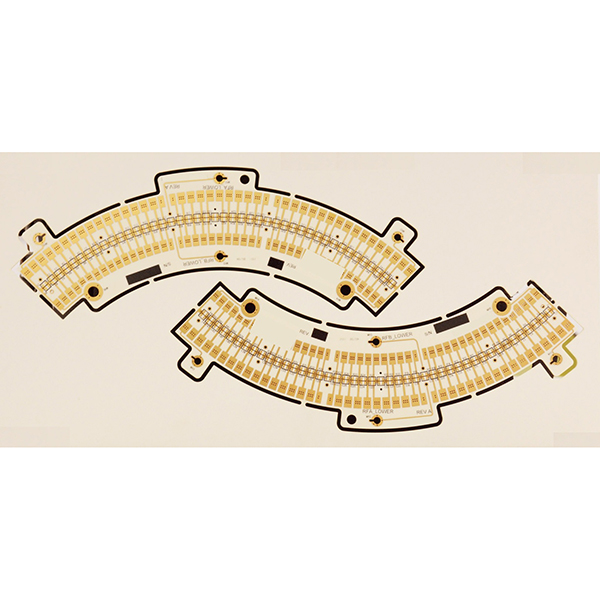
RF transceiver printed circuit board fabrication for 5G
RF transceiver printed circuit board fabrication generally uses hydrocarbon or PTFE substrates, typically with 2 to 8 layers, and features dense RF circuit layout on the PCB surface.
Description
RF transceiver modules are crucial signal input and output units in modern 5G communication networks, responsible for receiving and transmitting signals over wireless networks. RF transceiver printed circuit board (PCB) manufacturing requires extremely high precision in circuit etching, typically with ENIG (Electroless Nickel Immersion Gold) surface treatment.
Main Features of RF Transceiver Printed Circuit Board Fabrication
- Uses hydrocarbon substrates or PTFE substrates with excellent high-frequency performance to ensure minimal signal transmission loss.
- Flexible layer count, usually 2 to 8 layers, to meet the needs of RF circuit designs with varying complexity.
- Dense RF circuit layout with very high etching precision requirements to ensure signal integrity.
- Commonly uses ENIG (Electroless Nickel Immersion Gold) surface treatment to improve soldering reliability and corrosion resistance.
- Excellent impedance control to meet high-frequency signal transmission requirements.
- Supports the design of microstrip lines and coplanar waveguide structures with small sizes and fine spacing.
- Customizable substrate material, layer count, thickness, and surface treatment options according to customer requirements.
Main Applications
- RF transceiver modules and antenna units in 5G base stations.
- RF front-end modules in wireless communication devices such as WiFi, Bluetooth, and ZigBee.
- High-frequency transceiver modules in satellite communication and radar systems.
- High-frequency RF components in mobile communication terminals.
- High-frequency transceiver equipment in aerospace and military electronics.
- Wireless communication modules in IoT and smart home applications.
- Other RF communication and test equipment requiring high-frequency signal processing.