


 English
  Français
  Tiếng Việt
  Italiano
  Nederlands
  Türkçe
  Svenska
  Polski
  Română
  Latviešu
  한국어
한국어  Русский
  Español
  Deutsch
  Українська
  Português
  العربية
  Indonesian
  Čeština
  Suomi
Suomi  Eesti
Eesti  Български
  Dansk
Dansk  Lietuvių
  Bokmål
  Slovenčina
  Slovenščina
  Ελληνικά
  Magyar
  עברית
עברית 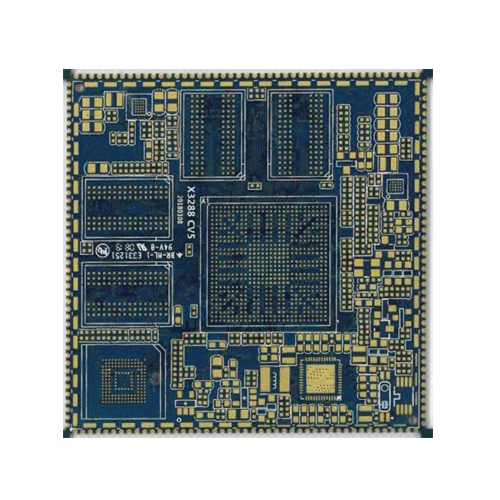
6-layer printed circuit board for high-density applications
A six-layer printed circuit board is a multilayer PCB made by alternately laminating six layers of conductive copper foil and insulating layers. 6-layer PCBs can provide more routing space and better electrical performance, making them especially suitable for complex, high-speed, and high-density electronic product designs.
Description
Six-Layer Printed Circuit Board (6-layer PCB) Overview
A six-layer printed circuit board (6-layer PCB) is a type of multilayer board with six layers of conductive copper foil. The 6-layer PCB is usually made by alternately stacking outer and inner layers, separated by insulating materials. Compared to double-layer or four-layer boards, a 6-layer PCB offers higher wiring density, better electromagnetic compatibility (EMC), and superior signal integrity, making it suitable for high-speed, high-performance, or complex circuit designs.
Typical Structure of a 6-Layer PCB
- Top Layer (L1, usually for component mounting and routing)
- Inner Layer 1 (L2, usually ground layer GND)
- Inner Layer 2 (L3, usually power layer)
- Inner Layer 3 (L4, usually signal layer)
- Inner Layer 4 (L5, usually signal layer or power/ground)
- Bottom Layer (L6, usually for component mounting and routing)
Main Features of 6-Layer PCBs
- Multilayer structure enables complex circuit routing and multiple power/ground management.
- Excellent signal integrity, suitable for high-speed signal transmission.
- Outstanding electromagnetic compatibility, reduces electromagnetic interference (EMI).
- Supports more compact designs, ideal for high-density, high-performance electronic products.
Main Applications of Six-Layer Printed Circuit Board
- Communication equipment.
- Servers and high-end computers.
- Industrial control systems.
- Medical electronics.
- Automotive electronics.
- High-speed storage devices, etc.