


 English
  Français
  Tiếng Việt
  Italiano
  Nederlands
  Türkçe
  Svenska
  Polski
  Română
  Latviešu
  한국어
한국어  Русский
  Español
  Deutsch
  Українська
  Português
  العربية
  Indonesian
  Čeština
  Suomi
Suomi  Eesti
Eesti  Български
  Dansk
Dansk  Lietuvių
  Bokmål
  Slovenčina
  Slovenščina
  Ελληνικά
  Magyar
  עברית
עברית 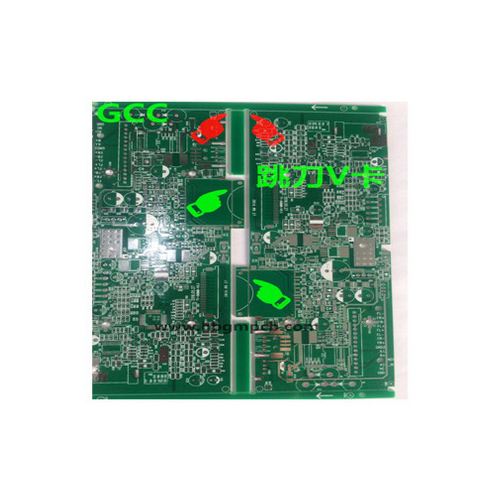
jump v-scoring with selective PCB v-groove technique
Jump V-scoring is a technical term in the electronics and PCB industry, mainly applied in PCB (printed circuit board) depaneling processes. This technique enhances the mechanical strength of the board while meeting depaneling requirements.
Description
Jump V-Scoring (Skip V-Groove PCB)
Jump V-scoring, also known as skip V-groove PCB, refers to a V-cut (V-scoring) process in PCB depaneling where the cutting tool skips certain areas and does not cut, only scoring where separation is needed while leaving other areas uncut.
Application Scenarios
- Commonly used when certain areas on a single board must remain connected, or when special structures require retained connection strength in PCB design.
- Typical applications: boards with connecting bridges, partial panelization, or electronic products with special structural requirements.
Advantages
- Improves overall PCB strength and helps prevent accidental breakage during transport or assembly.
- Flexibly meets different depaneling and connection requirements in specific areas.
Example
For instance, on a panelized board where most areas need to be separated except for a segment in the middle, jump V-scoring can be used—the V-cut tool will automatically lift and skip that region without cutting.