


 English
  Français
  Tiếng Việt
  Italiano
  Nederlands
  Türkçe
  Svenska
  Polski
  Română
  Latviešu
  한국어
한국어  Русский
  Español
  Deutsch
  Українська
  Português
  العربية
  Indonesian
  Čeština
  Suomi
Suomi  Eesti
Eesti  Български
  Dansk
Dansk  Lietuvių
  Bokmål
  Slovenčina
  Slovenščina
  Ελληνικά
  Magyar
  עברית
עברית 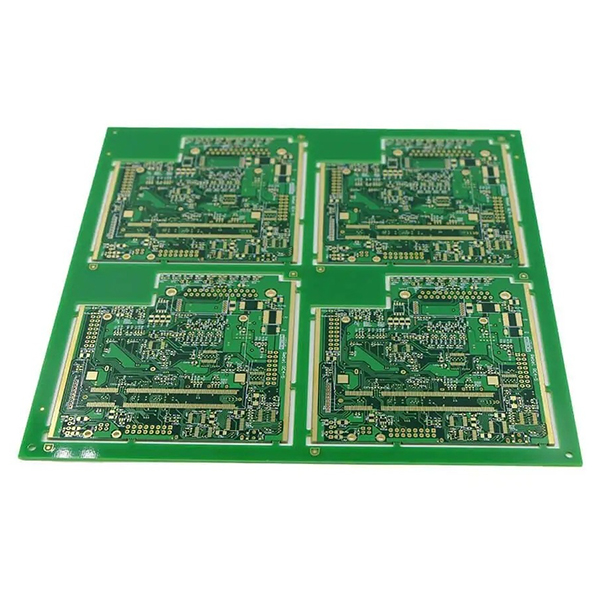
hybrid PCB means that mixed laminate print circuit board
Hybrid-laminated boards represent an advanced PCB structural solution balancing high performance and cost-effectiveness, ideal for electronic products requiring multiple capabilities such as high frequency, high speed, and high temperature resistance.
Description
Hybrid PCB (Mixed Laminate PCB)
Hybrid PCB (Mixed Laminate PCB) refers to a multilayer board formed by laminating two or more different types of substrates—such as FR4, PTFE, ceramic, or high-frequency materials—on a single printed circuit board (PCB) as required. This board combines the advantages of multiple materials, balancing high-frequency/high-speed signal transmission performance with excellent mechanical strength and cost control.
Key Features
- Material Diversity: Common combinations include FR4 + high-frequency materials, FR4 + ceramic, FR4 + PI, etc.
- Performance Complementarity: Enables specific layers for high-frequency/low-loss operation while others provide high strength/low cost.
- Wide Application: Extensively used in radar, antennas, RF, 5G communications, automotive electronics, aerospace, and other fields.
Application Scenarios
- High-frequency/high-speed signal layers use high-frequency materials, while other layers employ conventional materials like FR4, balancing performance and cost.
- Power and signal layers utilize materials with different dielectric constants and thermal expansion coefficients to enhance reliability.
Advantages and Challenges
- Advantages: Enhances overall PCB performance, optimizes costs, and accommodates complex circuit requirements.
- Challenges: Complex manufacturing processes demand high precision in lamination, interlayer bonding, and thermal expansion coefficient matching.