


 English
  Français
  Tiếng Việt
  Italiano
  Nederlands
  Türkçe
  Svenska
  Polski
  Română
  Latviešu
  한국어
한국어  Русский
  Español
  Deutsch
  Українська
  Português
  العربية
  Indonesian
  Čeština
  Suomi
Suomi  Eesti
Eesti  Български
  Dansk
Dansk  Lietuvių
  Bokmål
  Slovenčina
  Slovenščina
  Ελληνικά
  Magyar
  עברית
עברית 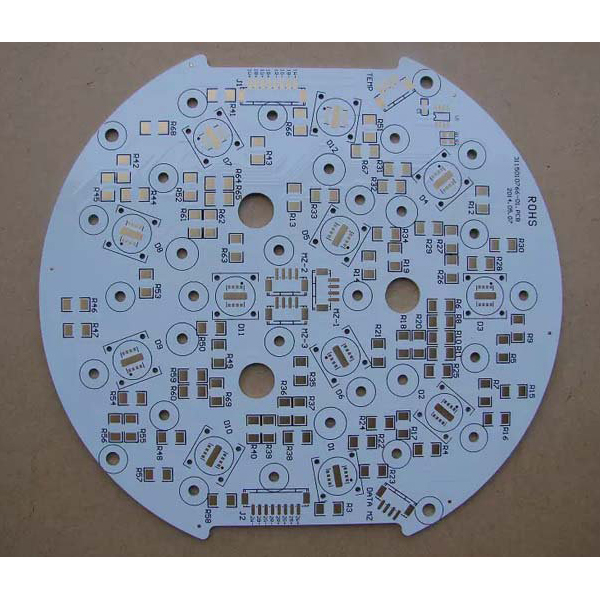
copper-based PCB with separate thermal and electrical paths
Copper-based PCBs are high-performance metal core printed circuit boards specifically designed for heat dissipation and high-power applications. Thanks to their excellent thermal conductivity and reliability, copper-based PCBs are suitable for fields with high requirements for heat dissipation, electrical performance, and mechanical strength as described above.
Description
Copper-based PCB (Copper Core PCB)
Copper-based PCB (Copper-based PCB or Copper Core PCB) is a type of copper-clad board that uses metal copper as the base material. Its structure is similar to that of aluminum PCBs, usually consisting of three parts: the copper base, the insulating layer, and the copper foil. Copper PCBs feature extremely high thermal conductivity and excellent mechanical strength, allowing them to quickly and efficiently dissipate the heat generated by electronic components. They are widely used in high-power, high-heat, and high-reliability electronic products, such as power amplifiers, communication devices, power modules, automotive electronics, and LED lighting.
Main Characteristics of Copper-based PCBs
- Extremely high thermal conductivity, far superior to aluminum PCBs and standard FR-4 boards.
- Excellent electrical insulation and mechanical processing performance.
- Can withstand higher current and power density, suitable for high-end electronics and applications with stringent heat dissipation requirements.
Main Applications of Copper-based PCBs
- High-power electronic equipment: such as power amplifiers, high-power power modules, inverters, etc., where efficient heat dissipation and high current capacity are required.
- LED lighting products: high-power LED lamps, LED street lights, automotive LED lamps, LED displays, etc., which can effectively reduce LED junction temperature and extend service life.
- Automotive electronics: engine control units, power distribution modules, onboard chargers, automotive lighting, etc., where heat dissipation and reliability are critical.
- Communication equipment: base station power amplifiers, RF modules, filters, microwave communication devices, etc., requiring strong heat dissipation and high stability.
- Industrial control: high-frequency switching power supplies, motor drivers, frequency converters, industrial automation equipment, etc., used in high-power and high-temperature electronic control systems.
- Medical equipment: medical power supplies, medical imaging equipment, laser therapy devices, etc., where heat dissipation and safety are essential.
- Aerospace and military fields: radar systems, navigation equipment, power systems, and other electronic components requiring high reliability and adaptation to extreme environments.
- New energy sector: photovoltaic inverters, wind power converters, battery management systems, and other power control boards for new energy devices.
- Consumer electronics: high-end audio equipment, gaming consoles, smart home power modules, and other products requiring high heat dissipation and high performance.
Thermal-electric Separation Copper PCB
The thermal-electric separation copper PCB is a special structure copper PCB, mainly used to further enhance the heat dissipation performance and electrical insulation reliability of electronic products. “Thermal-electric separation” means the thermal conduction path and electrical path are independently and separately designed, enabling efficient heat dissipation while ensuring excellent electrical insulation.
Structure of Thermal-electric Separation Copper PCB
- At the bottom of components requiring efficient heat dissipation, a window is opened directly on the copper base and filled with high thermal conductivity materials (such as ceramic pieces, copper pillars, or copper blocks), allowing the heat generated by the components to be directly transferred to the copper base, while the electrical connection still passes through the insulating layer and copper foil circuit.
- In this way, heat is directly dissipated through the thermal conduction pillar or window, while current still passes through the circuit over the insulating layer—thermal and electrical paths are separated and do not interfere with each other.
Main Advantages of Thermal-electric Separation Copper PCB
- Greatly improves heat dissipation efficiency, especially suitable for high-power LEDs, power devices, and other applications extremely sensitive to heat.
- Ensures electrical safety, preventing leakage and breakdown.
- Enables miniaturization and high integration design.
Application Scenarios for Thermal-electric Separation Copper PCB
- High-power LED lighting
- COB packaging
- Automotive headlights
- Power semiconductor modules
- Other related fields