


 English
  Français
  Tiếng Việt
  Italiano
  Nederlands
  Türkçe
  Svenska
  Polski
  Română
  Latviešu
  한국어
한국어  Русский
  Español
  Deutsch
  Українська
  Português
  العربية
  Indonesian
  Čeština
  Suomi
Suomi  Eesti
Eesti  Български
  Dansk
Dansk  Lietuvių
  Bokmål
  Slovenčina
  Slovenščina
  Ελληνικά
  Magyar
  עברית
עברית 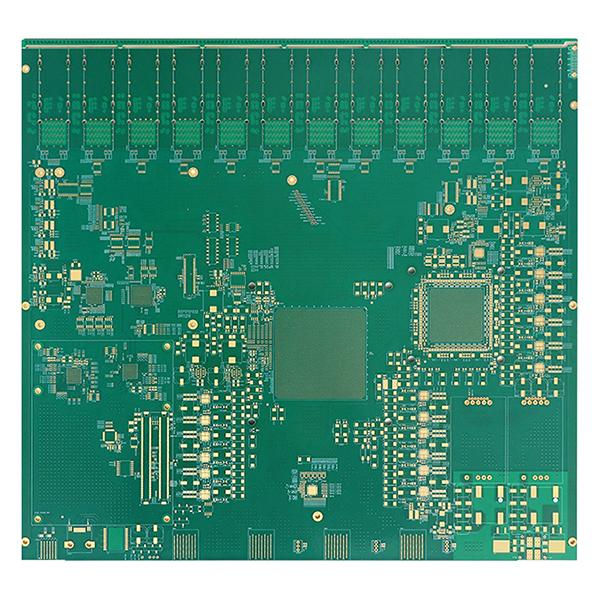
26-layer PCB for high-speed networking and data centers
A 26-layer printed circuit board is a high-end multilayer PCB featuring an alternating stackup of 26 layers of conductive copper foil and insulating materials. It enables complex and high-density circuit routing, supports the transmission of numerous high-speed signals, and delivers excellent electrical performance and reliability.
Description
A 26-layer PCB is commonly used in high-end equipment that requires exceptional signal integrity, anti-interference capability, and routing space. Its multilayer structure helps optimize power distribution, enables precise impedance control, and supports advanced technologies such as blind/buried vias and HDI, meeting the demands of high-speed, high-frequency, and multi-chip integration applications.
Main Features of a 26-Layer Printed Circuit Board
- Ultra-high layer count design supports complex and high-speed signal routing.
- Uses Tachyon 100G and hydrocarbon materials for extremely low signal loss, making it ideal for high-speed data transmission.
- Fine line width/spacing and small via technology increase routing density.
- Uniform board thickness and stable structure suit large-scale networking equipment.
- Even copper thickness on inner and outer layers, with strong current-carrying capacity and excellent oxidation resistance.
- ENIG (Electroless Nickel Immersion Gold) surface finish effectively prevents oxidation and ensures reliable soldering.
Primary Applications of 26-Layer PCBs
- High-end network switches.
- Core switching devices for data centers.
- High-speed routers and optical communication systems.
- Large enterprise and telecom operator network infrastructure.
Key Parameters
- Layers: 26
- Materials: Tachyon 100G, hydrocarbon
- Board thickness: 3.5±0.35mm
- Inner/outer copper thickness: 0.33OZ
- Minimum line width/spacing: 0.118/0.051mm
- Minimum hole diameter: 0.225mm
- Surface finish: ENIG