


 English
  Français
  Tiếng Việt
  Italiano
  Nederlands
  Türkçe
  Svenska
  Polski
  Română
  Latviešu
  한국어
한국어  Русский
  Español
  Deutsch
  Українська
  Português
  العربية
  Indonesian
  Čeština
  Suomi
Suomi  Eesti
Eesti  Български
  Dansk
Dansk  Lietuvių
  Bokmål
  Slovenčina
  Slovenščina
  Ελληνικά
  Magyar
  עברית
עברית 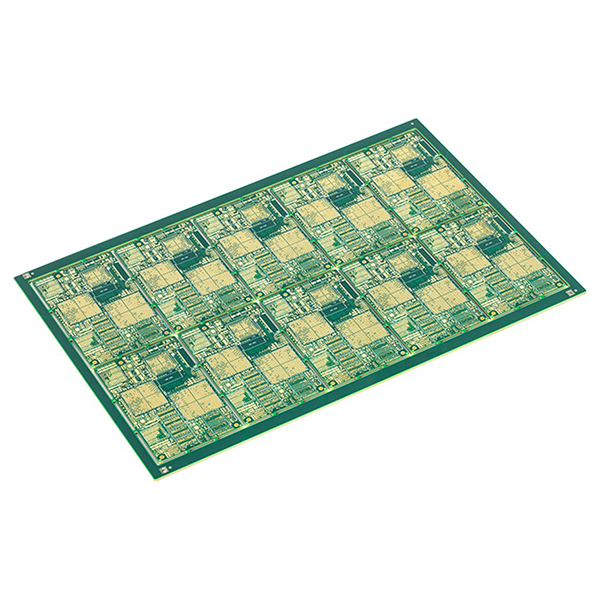
24-layer 2nd-order HDI PCB for high density applications
A twenty-four layer printed circuit board (24-layer PCB) is a high-multilayer board product formed by alternately laminating twenty-four layers of conductive copper foil and insulating dielectric material.
Description
A Twenty-Four Layer Printed Circuit Board (PCB)
A twenty-four layer printed circuit board (PCB) is a high-end multilayer PCB, typically used in electronic systems that require complex circuitry, high-density routing, high-speed signal transmission, and high reliability.
Main Features of 24-Layer PCBs
- Supports ultra-high-density and complex circuit routing.
- Utilizes 2nd-order HDI technology with stacked and staggered blind/buried vias.
- Excellent signal integrity and EMI/EMC performance.
- Precise impedance control and optimized power distribution network.
- Suitable for high-speed, high-frequency, and multi-chip integration designs.
- Meets the requirements for large-scale component mounting with high reliability.
- Multiple layers provide ample routing space for extremely complex circuit designs and ultra-dense component layouts.
- Superior electrical performance: multilayer structure helps enhance signal and power integrity, reducing crosstalk and noise.
- Strong EMI/EMC control: facilitates electromagnetic compatibility design, ideal for high-speed, high-frequency applications.
- Supports advanced processes such as blind/buried vias and HDI, enabling smaller size and higher integration.
Main Applications of 24-Layer PCBs
- High-performance servers and data center equipment.
- Network communication and base station equipment.
- Aerospace electronic systems.
- Medical instruments and industrial automation.
- High-end computing and communication terminals.
Main Specifications
- Number of Layers: 24
- Material: FR-4 (Tg180), VT-47
- Board Thickness: 2.59±0.26mm
- Trace Width/Spacing: 3.5/5.0mil
- Hole Diameter: 0.25mm
- Surface Finish: ENIG (Immersion Gold)