


 English
  Français
  Tiếng Việt
  Italiano
  Nederlands
  Türkçe
  Svenska
  Polski
  Română
  Latviešu
  한국어
한국어  Русский
  Español
  Deutsch
  Українська
  Português
  العربية
  Indonesian
  Čeština
  Suomi
Suomi  Eesti
Eesti  Български
  Dansk
Dansk  Lietuvių
  Bokmål
  Slovenčina
  Slovenščina
  Ελληνικά
  Magyar
  עברית
עברית 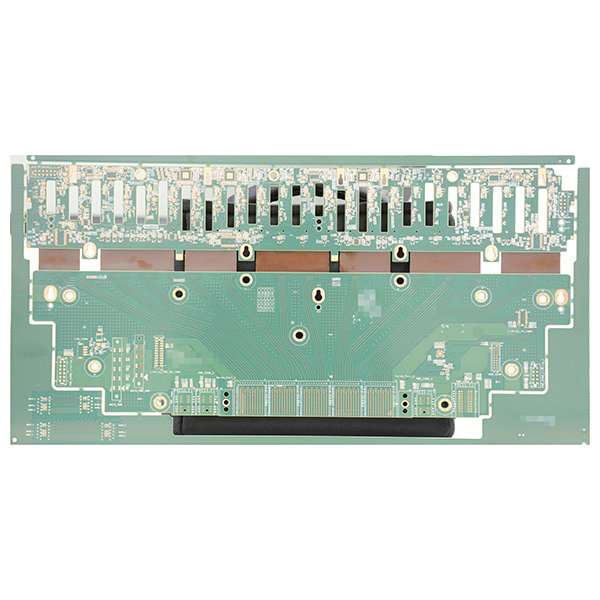
HDD storage backplane pcb manufacturing for data centers
HDD storage backplane PCB manufacturing typically features greater board thickness and higher layer count to meet the demands of multi-drive concurrent connection and stable operation.
Description
The HDD storage backplane is a key component that supports and connects hard disk drive arrays to meet large-capacity storage needs in data centers and related fields. The PCB design of HDD storage backplanes includes multiple hard drive connection ports, supporting multi-drive hot swapping and high-speed data exchange. Due to the requirement for high-speed data access, HDD storage backplane PCB manufacturing commonly uses high-speed materials and advanced techniques such as back drilling, resin plug holes, and press-fit holes, which significantly enhance high-speed signal integrity and reliability while reducing signal loss.
Main Features of HDD Storage Backplane PCB Manufacturing
- High layer count and multilayer structure design to meet complex signal transmission and multi-port connection needs.
- Greater board thickness for enhanced mechanical strength and durability, suitable for high-density HDD array installation.
- Multiple drive port design, supporting large-capacity concurrent storage and hot swapping.
- Use of high-speed materials to ensure signal integrity and low loss during high-speed data transmission.
- Support for advanced techniques such as back drilling, resin plug holes, and press-fit holes to further improve high-speed signal quality and reliability.
- Excellent electrical performance and impedance control to meet the stringent requirements of high-speed data flow.
- Customizable dimensions, port quantities, layer count, and special processes according to customer needs.
Main Applications
- Large-capacity storage servers and storage arrays in data centers.
- Enterprise-level NAS, SAN, and other network storage devices.
- Centralized storage solutions for cloud computing platforms.
- Data archiving and backup equipment in finance, telecommunications, and other industries.
- High-speed storage expansion for high-performance computing and AI servers.
- Other industrial and medical devices requiring large-capacity, high-speed storage.