


 English
  Français
  Tiếng Việt
  Italiano
  Nederlands
  Türkçe
  Svenska
  Polski
  Română
  Latviešu
  한국어
한국어  Русский
  Español
  Deutsch
  Українська
  Português
  العربية
  Indonesian
  Čeština
  Suomi
Suomi  Eesti
Eesti  Български
  Dansk
Dansk  Lietuvių
  Bokmål
  Slovenčina
  Slovenščina
  Ελληνικά
  Magyar
  עברית
עברית 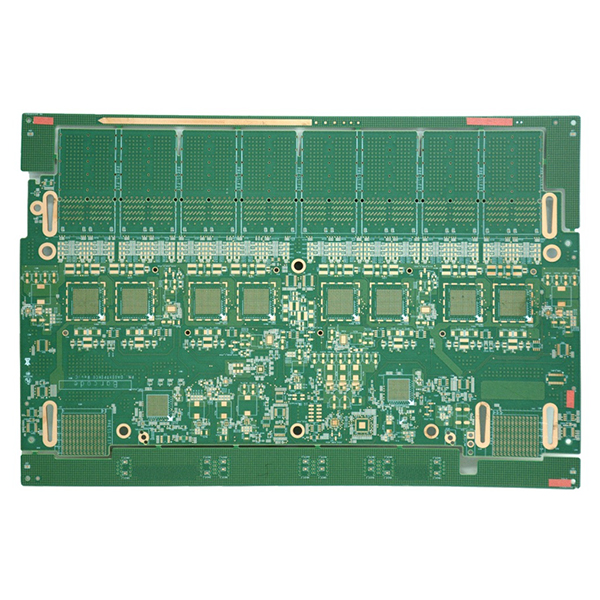
switch PCB manufacturing for high-density networking
Switch PCBs are usually designed with multilayer structures of 12 or more layers and aspect ratios above 9:1 to meet the needs of high-density assembly and complex signal transmission.
Description
The line width and spacing reach 0.075 and 0.090mm, and the hole diameter is 0.225mm, making them suitable for high-density interconnection. Switch PCB manufacturing commonly adopts hybrid pressing processes, mainly using Ultra Low Loss grade high-speed materials mixed with standard FR4 materials to balance signal performance and cost control. The PCB layout usually includes a large number of optical module or high-speed connector interfaces. To meet the requirements of insertion loss and signal integrity for high-frequency and high-speed signals, advanced technologies such as back drilling and resin plug holes + POFV are widely used in the design.
Main Features of Switch PCB Manufacturing
- Multilayer structure, generally with 12 layers or more, suitable for complex network device designs.
- High aspect ratio, greater than or equal to 9:1, supporting high-density vertical interconnection.
- Fine circuit craftsmanship, with minimum line width/spacing of 0.075/0.090mm, meeting high-speed signal transmission requirements.
- Minimum hole diameter of 0.225mm, suitable for high-density interconnection and miniaturized designs.
- Hybrid pressing process, combining Ultra Low Loss high-speed materials with standard FR4 for balanced performance and cost.
- Numerous high-speed interface layouts to accommodate multiple optical modules and high-speed connector applications.
- Supports back drilling and resin plug holes + POFV processes, significantly reducing signal insertion loss and improving signal integrity.
- Customizable dimensions, layer count, special processes, and interface layouts according to customer requirements.
Main Applications
- Various high-performance network switch motherboards and expansion cards.
- Core switching equipment for data centers and cloud computing platforms.
- High-speed routers and backbone network communication equipment.
- Core switching equipment for large enterprise networks and metropolitan area networks.
- High-speed interconnection modules in 5G communication base stations and transmission networks.
- Other network and communication equipment fields with stringent requirements for high-speed signals and high-density interconnection.