


 English
  Français
  Tiếng Việt
  Italiano
  Nederlands
  Türkçe
  Svenska
  Polski
  Română
  Latviešu
  한국어
한국어  Русский
  Español
  Deutsch
  Українська
  Português
  العربية
  Indonesian
  Čeština
  Suomi
Suomi  Eesti
Eesti  Български
  Dansk
Dansk  Lietuvių
  Bokmål
  Slovenčina
  Slovenščina
  Ελληνικά
  Magyar
  עברית
עברית 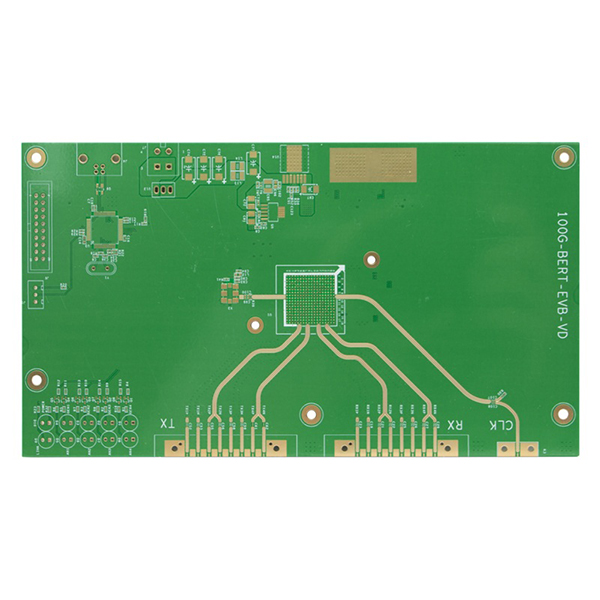
5G RF high-frequency PCB circuit board manufacturing
5G RF PCB board manufacturing uses high-end RO4350B + TU768 materials, produced through advanced processes such as hybrid pressing, mechanical drilling, and ENIG surface finishing, providing high precision and reliability.
Description
The 5G RF PCB board features hole diameters as small as 0.2mm and line width/spacing down to 100/100μm, meeting the stringent requirements of high-frequency, high-speed signal transmission. It is widely used in 5G signal testing and related fields.
Main Features of 5G RF PCB Board Manufacturing
- Uses high-performance RO4350B + TU768 materials with excellent high-frequency characteristics and low dielectric loss, ensuring stable signal transmission.
- Advanced hybrid pressing process effectively enhances interlayer bonding strength and extends product lifespan.
- Precision mechanical drilling achieves minimum hole diameters of 0.2mm, suitable for high-density assembly and micro-component soldering.
- The surface uses an ENIG (Electroless Nickel Immersion Gold) process, providing excellent solderability, improved oxidation resistance, and adaptability to complex conditions.
- Minimum line width/spacing down to 100/100μm, supporting high-speed, high-density routing designs.
- Good manufacturing consistency and high reliability, suitable for mass production and complex testing requirements.
- Customizable layers, thicknesses, and special functions according to customer needs, flexibly meeting various application scenarios.
Main Applications
- 5G signal testing equipment and RF testing systems.
- 5G base station RF modules and antenna units.
- High-speed signal transmission and microwave communication devices.
- Wireless communication terminals and RF front-end modules.
- Radar, satellite communication, and other high-frequency electronic fields.
- Other communication and electronic devices with stringent requirements for high frequency and high reliability.