


 English
  Français
  Tiếng Việt
  Italiano
  Nederlands
  Türkçe
  Svenska
  Polski
  Română
  Latviešu
  한국어
한국어  Русский
  Español
  Deutsch
  Українська
  Português
  العربية
  Indonesian
  Čeština
  Suomi
Suomi  Eesti
Eesti  Български
  Dansk
Dansk  Lietuvių
  Bokmål
  Slovenčina
  Slovenščina
  Ελληνικά
  Magyar
  עברית
עברית 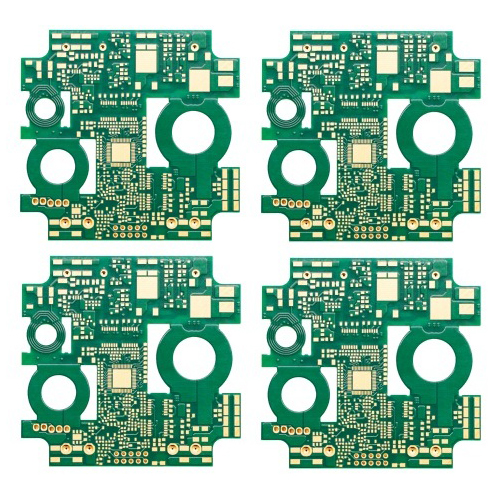
high thermal conductivity heavy copper PCB for power applications
High thermal conductivity heavy copper PCB is a type of printed circuit board designed for high-power and high-heat applications. Featuring thick copper layers (such as 3OZ, 5OZ, or more) and high thermal conductivity substrates, it is ideal for advanced electronic applications that demand high current capacity, efficient heat dissipation, and high reliability.
Description
High Thermal Conductivity Heavy Copper PCB
Compared to standard PCBs, high thermal conductivity heavy copper PCBs conduct and dissipate heat generated during circuit operation more efficiently. They also offer superior current-carrying capacity and mechanical strength, ensuring the safe and stable operation of complex or high-load electronic devices. These PCBs are commonly used in power supplies, inverters, electric vehicles, LED lighting, and industrial control systems where heat dissipation and current capacity are critical.
Main Features
- High Multilayer Design: 16-layer structure meets the integration needs of complex high-power circuits and multifunctional modules.
- Extra Thick Copper: Maximum inner copper thickness up to 5OZ significantly improves current-carrying and heat dissipation capabilities.
- High Thermal Conductivity: Uses high thermal conductivity materials to enhance heat dissipation performance, ideal for high-power and high-heat applications.
- High Precision Fabrication: Thickness tolerance of ±0.15mm and press-fit hole tolerance of ±0.05mm ensure product assembly and performance consistency.
- Multiple Special Hole Designs: Supports blind vias, press-fit holes, and resin-filled vias to accommodate diverse assembly and connection needs.
- High Reliability: Thick copper and multilayer structure enhance mechanical strength and durability, suitable for high-load environments.
Main Applications
- Power electronic devices (such as inverters, converters, and high-power power supplies)
- Automotive electronics (such as new energy vehicle battery management systems, onboard chargers, etc.)
- Industrial automation and robotics control systems
- Communication base stations and high-power signal processing equipment
- LED lighting and high-power driver modules
- Aerospace and military electronic systems