


 English
  Français
  Tiếng Việt
  Italiano
  Nederlands
  Türkçe
  Svenska
  Polski
  Română
  Latviešu
  한국어
한국어  Русский
  Español
  Deutsch
  Українська
  Português
  العربية
  Indonesian
  Čeština
  Suomi
Suomi  Eesti
Eesti  Български
  Dansk
Dansk  Lietuvių
  Bokmål
  Slovenčina
  Slovenščina
  Ελληνικά
  Magyar
  עברית
עברית 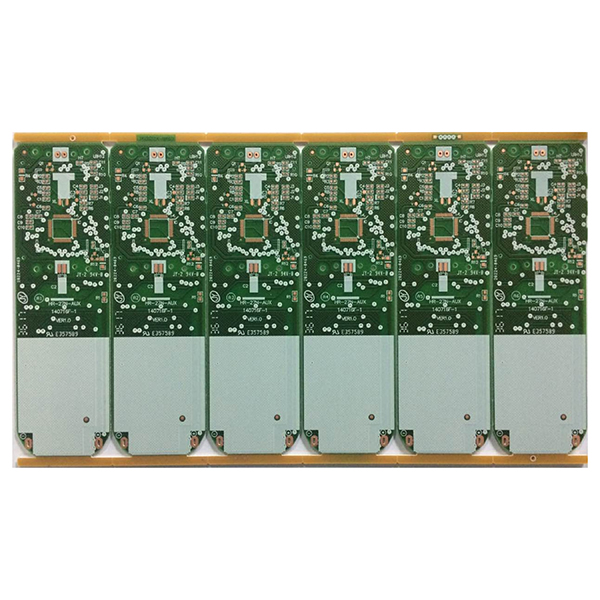
silver paste filled via PCB for conductivity applications
Silver paste filled holes involve filling PCB holes with silver paste to enhance conductivity and reliability, commonly used in high-end or specialized circuit boards with specific performance requirements.
Description
Silver Paste Filled Via PCB
Silver paste filled via PCB refers to a process board in the PCB (printed circuit board) industry where silver paste is used to fill or coat vias and through-holes on the circuit board. Common English terms include “silver paste filled via PCB” or “silver paste plugged via PCB.”
Process Principle
- During PCB manufacturing, silver paste (a conductive paste containing silver) is first filled into pre-drilled holes (such as through-holes or vias).
- Subsequently, baking or curing causes the silver paste to form a reliable conductive pathway within the holes.
Primary Functions
- Conductive Connection: Utilizes silver’s high conductivity to achieve electrical interconnection between PCB layers.
- Enhanced connection reliability: Silver paste filling improves the mechanical strength of vias, preventing detachment during soldering or bending.
- Special structures: For specific requirements (e.g., blind vias, buried vias, Pad on Via structures), silver paste filling enables high-density interconnections.
Typical Applications
- High-frequency, high-density communication and radio frequency (RF) equipment.
- Circuits requiring high current carrying capacity or low-impedance interconnections.
- High-end electronics in medical, military, automotive, and other sectors.
Differences from Conventional Through-Holes
- Conventional through-holes are typically filled with electroplated copper, while silver paste filling uses silver paste—higher cost but superior conductivity.
- Silver paste filling is suitable for extremely small apertures, high-density interconnections, or specialized electrical performance requirements.